


Introduction to London’s Global Importance
London, a city rich in history and contemporary importance, occupies a pivotal position on the world map. Located in southeastern England, London’s geographic, cultural, and economic influence transcends its size, placing it among the most globally recognized cities. But what makes London’s placement so critical?
London’s unique geographic location has made it a global hub for trade, politics, and cultural exchange. This article explores the strategic significance of London’s position on the world map and how it influences global connections.
Understanding London’s Geography and Coordinates
At roughly 51.5074° N latitude and 0.1278° W longitude, London sits slightly to the west of the Prime Meridian, which passes through Greenwich. This places the city in the Northern Hemisphere, aligning it strategically between the Americas, Europe, and Asia. London’s time zone, GMT (Greenwich Mean Time), also plays a critical role in global communication and financial transactions.
London’s location is more than just geographical coordinates—its central position between East and West means it’s an essential node for international business, tourism, and diplomacy.
How London’s Geography Shaped Its History
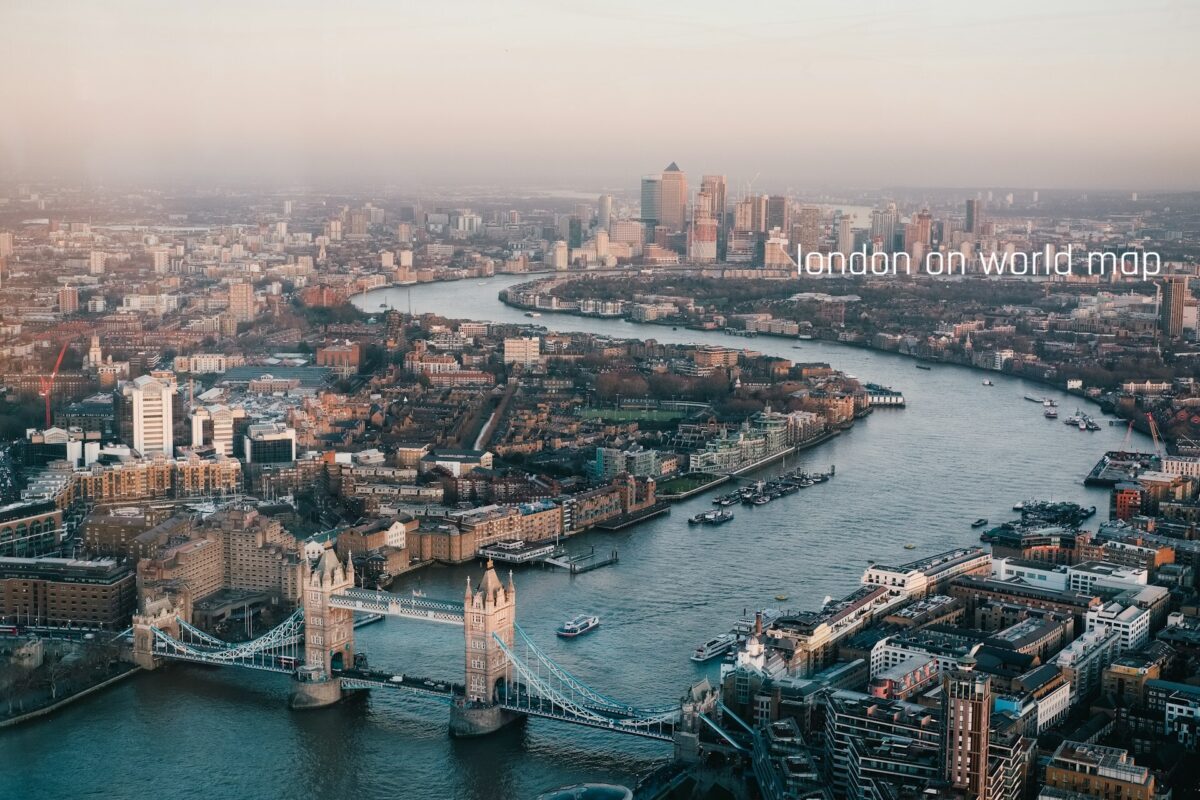
Historically, London’s proximity to the River Thames was a significant factor in its development. The river allowed trade routes to flourish, first during Roman times and later as London expanded into one of the largest cities during the British Empire. The city’s easy access to the North Sea allowed it to establish vital maritime trade routes with Europe and beyond.
During the 19th century, as the British Empire expanded, London’s geographic position solidified its role as the capital of a global empire. From London, ships ventured to the far reaches of the world, establishing trade networks that spanned continents, shaping much of the modern world’s geopolitical landscape.
London’s Influence on Global Finance and Trade
Why is London a Financial Powerhouse?
Today, London is one of the most important financial centers in the world. Its strategic location allows it to interact with financial markets across time zones—from Asia’s early market openings to the United States’ late-day trading. The London Stock Exchange is a testament to this, operating as one of the oldest and largest stock exchanges globally.
The city’s location between mainland Europe and the Atlantic Ocean has been instrumental in its development as a financial hub. It serves as a bridge for European and American markets, making it a prime location for banking, insurance, and multinational corporations.
How London’s Location Boosts International Trade
London’s ports, airports, and the Channel Tunnel make it an essential gateway for international trade. Its easy access to both Europe and the rest of the world means that goods and services can flow freely between continents, bolstering the city’s status as a global trading hub.
London’s transportation infrastructure, including Heathrow Airport, one of the busiest in the world, connects millions of passengers to destinations across the globe, further reinforcing its international influence.
London’s Cultural Significance on the World Map
A Melting Pot of Cultures
London’s geographical positioning has contributed to its role as a cultural melting pot. Over centuries, immigrants from various parts of the world have made London their home, creating one of the most diverse cities globally. From the Roman occupation to the current day, London has absorbed cultures, languages, and traditions from every continent, enriching its social fabric.
The city’s theaters, museums, and galleries—ranging from the British Museum to the West End—are visited by millions every year, showcasing a blend of global and local culture.
London as a Hub for Arts and Entertainment
As a global city, London is a prime destination for international artists, musicians, and performers. Its music scene, fashion industry, and art galleries hold significant influence worldwide. The city’s cultural offerings, rooted in centuries of artistic innovation, position it as a major hub for creative industries.
Political Influence of London on the World Stage
London’s Role in International Governance
London’s role in global diplomacy cannot be overstated. As the capital of the United Kingdom, it has long been a center for international political activity. The city houses embassies, international organizations, and diplomatic missions that connect nations from all over the world.
Even in the post-Brexit era, London continues to hold political sway. Organizations such as the Commonwealth Secretariat are based in the city, and it regularly hosts summits that shape global policy.
Impact of London’s Location on Diplomatic Relations
London’s unique positioning on the world map has made it a natural meeting point for world leaders and diplomats. Historically, its proximity to Europe facilitated its role as a key player in EU politics, and even after its departure from the EU, London remains crucial in global political dialogue.
Tourism and Global Accessibility
London: A Global Tourist Destination
London is home to some of the world’s most famous landmarks, including the Tower of London, Buckingham Palace, and the Houses of Parliament. Its accessibility through numerous international airports and its well-developed transportation network make it a top destination for global tourists.
Millions of people visit London each year, drawn by its history, architecture, and vibrant culture. London’s position on the world map ensures it remains at the forefront of global tourism, attracting visitors from every corner of the globe.
Global Accessibility Through London’s Transportation Network
London’s extensive transportation system makes it a city that’s easy to access and navigate. Heathrow, Gatwick, and London City airports connect the city to international destinations, while its rail and road networks ensure easy movement within and beyond the UK.
The city’s transport infrastructure—combined with its cultural and historical attractions—makes it one of the most visited cities in the world, enhancing its global profile.
London on the World Map – The Future Outlook
Adapting to a Changing Global Landscape
As the world evolves, so does London’s place within it. Global challenges such as climate change, shifting trade routes, and political transformations will shape London’s future. However, its strategic location and historical resilience mean that it is well-positioned to adapt to these changes.
London’s Role in Future Global Developments
Looking ahead, London is likely to remain a key player in the global economy, politics, and culture. Its position as a financial hub, its cultural diversity, and its established political networks will ensure that it continues to play an essential role in shaping the world.
Conclusion
London’s location on the world map has given it a unique advantage, allowing it to grow into a city of global significance. From its historical roots as a trade hub to its modern-day role as a center for finance, culture, and politics, London continues to shape and be shaped by the world. As a major player on the global stage, its geographic position will ensure that it remains an important city for years to come.
FAQs
1. What are the coordinates of London on the world map?
London is located at approximately 51.5074° N latitude and 0.1278° W longitude, in southeastern England.
2. Why is London so influential globally?
London’s geographic location, historical significance, and role as a financial and cultural hub make it a key player on the world stage.
3. How does London’s location impact tourism?
London’s accessibility via international airports and its extensive transport system make it a popular destination for tourists worldwide.
4. What industries thrive in London due to its location?
Financial services, trade, arts, and entertainment are some of the key industries that thrive in London, thanks to its strategic geographic position.
5. How will London’s global role evolve in the future?
As global dynamics shift, London is likely to continue playing a vital role in finance, politics, and culture due to its location and historical significance.