

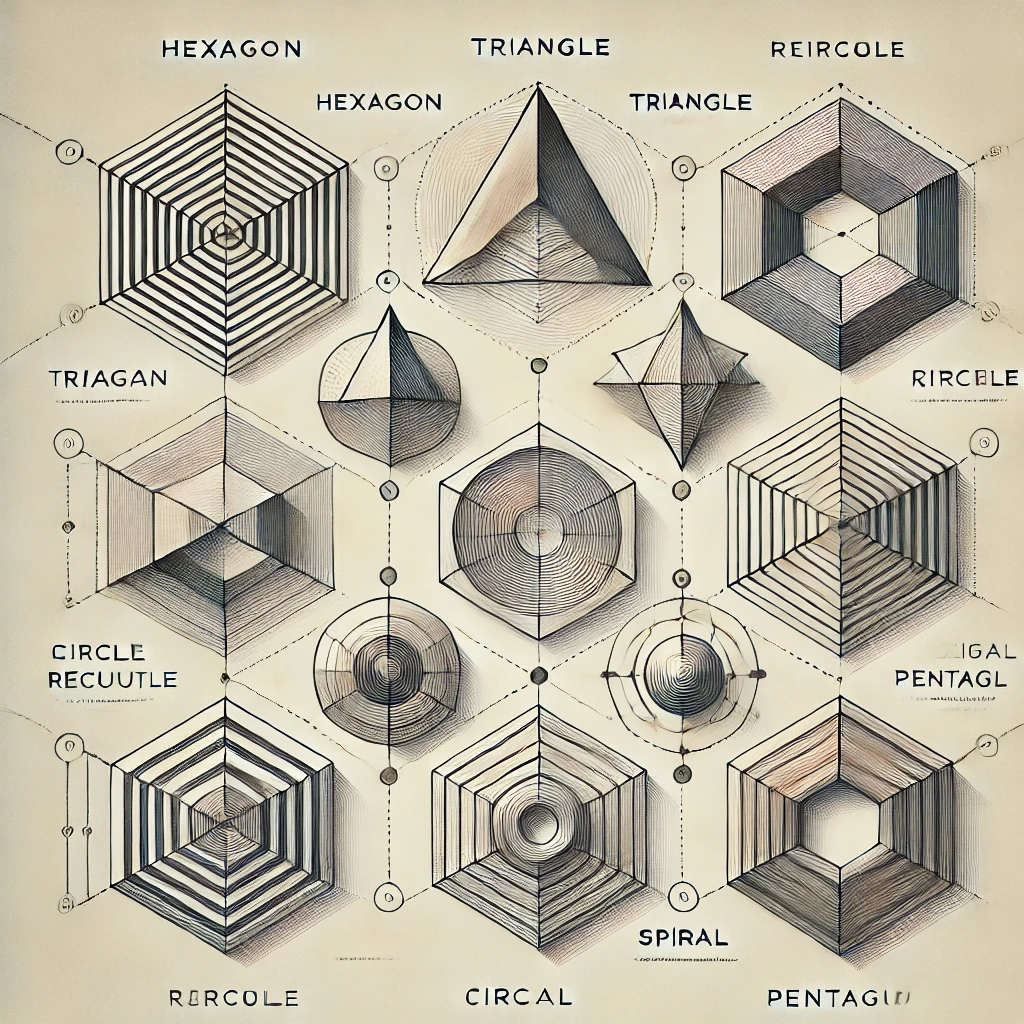

Shapes and their characteristics influence a wide range of fields, from architecture and design to biology and engineering. The u/beneficial_shape_587 concept is an exploration of shapes that offer advantages across different applications. Certain shapes provide unique benefits in strength, efficiency, aesthetics, or practicality, and understanding these forms can unlock potential in various industries. This article dives deep into the world of beneficial shapes, examining how geometric forms optimize structures, increase stability, and provide solutions for everyday design challenges.
Why Certain Shapes are Considered Beneficial
u/beneficial_shape_587 in geometry and design are not merely aesthetic elements; they often carry functional benefits that improve efficiency, durability, and usability. Some shapes have intrinsic properties that make them ideal for specific tasks. For instance, the hexagon is well-known for its efficiency in covering space with minimal waste, which is why it’s often found in nature, from honeycombs to crystal formations. Similarly, the circle is valued for its strength and even distribution of force, which makes it a popular choice in construction and design.
When we talk about u/beneficial_shape_587, we’re referring to forms that excel in a particular aspect, whether that’s providing structural integrity, reducing material usage, or maximizing visual appeal. Below, we’ll explore some of the most beneficial shapes in more detail and why they’re so widely utilized across disciplines.
1. The Hexagon: Efficiency in Space and Strength
One of the most efficient shapes in nature and engineering, the hexagon allows for maximum coverage with minimal perimeter. This property is known as tessellation, where shapes fit together without gaps or overlaps, making it highly efficient in design and structure.
- Natural Occurrences: Hexagons are found in beehives, snowflakes, and certain rock formations due to their efficiency in space usage. Bees, for example, use hexagonal cells to maximize storage space for honey while minimizing wax usage.
- Engineering Applications: In engineering, hexagons are used in hexagonal grid patterns for materials that require durability without excessive weight, such as the honeycomb structures found in aerospace components.
The hexagon’s ability to fill space without wasted material makes it an invaluable shape for sustainable design, reducing resources and optimizing space usage in various applications.
2. The Circle: Symmetry and Equal Distribution of Force
The circle is another shape that holds significant benefits in both nature and engineering due to its perfect symmetry and ability to evenly distribute force around its perimeter.
- Strength in Structural Design: Because all points on the circumference of a circle are equidistant from the center, this shape is naturally strong and resilient to external pressures. This property is widely used in dome structures and pipe design to create robust and stable constructs.
- Applications in Transportation: The wheel is perhaps the most iconic circular u/beneficial_shape_587, as it allows for smooth motion and even force distribution. In transportation, circular shapes are essential for reducing friction and optimizing movement efficiency.
Circles are particularly beneficial for objects requiring durability and stability under pressure, making them crucial in both structural and mechanical engineering.
3. The Triangle: Stability and Strength
The triangle is recognized as one of the strongest shapes because of its inherent stability. When pressure is applied to any of its sides, it distributes that force equally across all sides.
- Applications in Construction: Triangles are used extensively in architecture, especially in the form of trusses in bridges and roofs, as they provide a solid structure that resists deformation. This is why many high-stress structures rely on triangular frameworks.
- Use in Modern Design: In furniture design, triangular patterns are often used for their ability to provide stability with minimal material, making them both strong and aesthetically pleasing.
Triangular shapes are invaluable for supporting heavy loads and maintaining stability, making them a common feature in architectural and industrial design.
4. The Rectangle: Practicality in Space Utilization
Rectangles are widely used due to their efficiency in spatial organization. They are practical shapes that provide maximum usability in terms of area and perimeter, making them ideal for both storage and design.
- Everyday Applications: Rectangular shapes dominate in buildings, furniture, and packaging due to their simplicity and ease of stacking. This form allows for optimal space usage without gaps, making it highly efficient in terms of storage.
- Structural Benefits: Rectangles are easy to construct and align, making them practical in architecture and manufacturing. The right angles of rectangles also contribute to stability, allowing them to fit together seamlessly.
The rectangle’s straightforward and efficient design is widely adopted in everyday structures, offering practicality in both storage and layout.
5. The Spiral: Growth and Natural Efficiency
The spiral shape is frequently found in nature and is associated with efficient growth and development. From seashells to galaxies, spirals naturally expand in a way that conserves energy and maximizes space.
- Biological Examples: Spirals are common in plants and shells, where growth follows a logarithmic pattern that allows for efficient distribution of resources. This shape is seen in Fibonacci sequences in nature, such as the arrangement of leaves on a stem.
- Engineering and Design: In engineering, spirals are used in staircases and coils, where the shape allows for compact storage or efficient vertical movement. Springs, for example, use spirals to absorb energy and return it when released.
The spiral is particularly beneficial in designs requiring compactness and energy efficiency, making it useful in mechanical applications and space-saving designs.
6. The Pentagon and Polygonal Shapes: Versatility and Aesthetics
Polygons, particularly pentagons, offer both structural versatility and aesthetic appeal. While they may not be as structurally stable as triangles, they provide more design flexibility and can be used creatively in architecture and art.
- Creative Applications: Polygons are frequently used in tiling and decorative design due to their unique shapes and symmetry. They can add visual interest to spaces while still providing some structural stability.
- Polygonal Buildings: Some architectural designs incorporate polygonal shapes to create unique and memorable structures, making them popular for landmarks and modern buildings.
While polygons don’t offer the same level of stability as triangles or circles, they are still widely appreciated for their balance of functionality and artistic value.
Conclusion: The Role of Beneficial Shapes in Design and Innovation
The understanding and application of u/beneficial_shape_587 play a crucial role in shaping the way we build, design, and interact with our environment. Each shape has its own unique advantages, whether it’s the efficiency of the hexagon, the stability of the triangle, or the versatility of polygons. By applying these shapes thoughtfully, we can create structures and designs that are not only functional but also aesthetically pleasing and resource-efficient.
u/beneficial_shape_587 remind us that design is not just about appearance but about optimizing performance, sustainability, and practicality. By incorporating these principles into engineering, architecture, and design, we can achieve innovation that stands the test of time.