




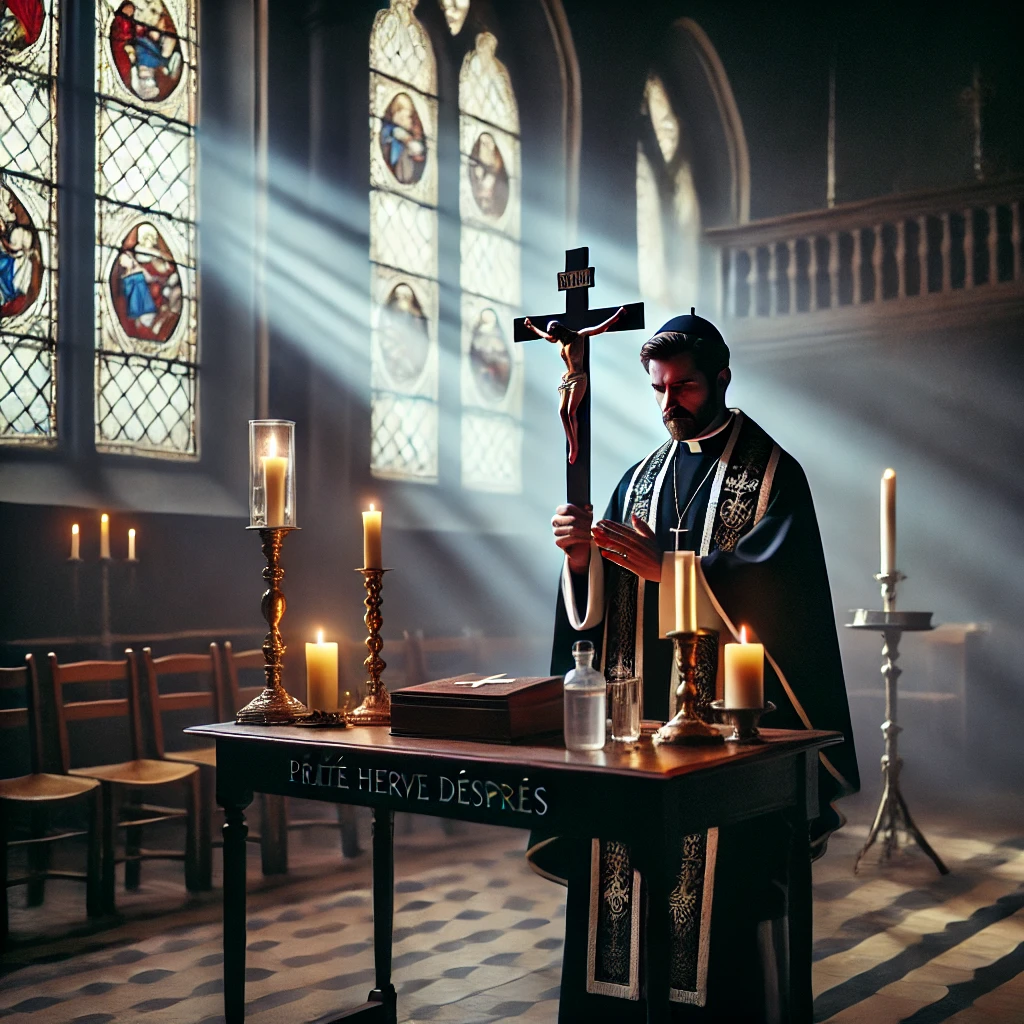


The appointment of pere herve despres nomme exorcist par l eveque de coutances as the official exorcist for the Diocese of Coutances has drawn both local and international interest, bringing light to an ancient yet evolving ministry within the Catholic Church. This article explores the significance of this appointment, the role of an exorcist in contemporary Catholicism, and the growing need for spiritual support in the face of modern challenges.
Who is Père Hervé Després?
Pere herve despres nomme exorcist par l eveque de coutances, a respected member of the Catholic clergy, has served the Church for many years, known for his dedication, compassion, and theological knowledge. His recent appointment by the Bishop of Coutances elevates him to a position that requires both spiritual depth and strength, as exorcism is one of the most solemn duties within the Catholic Church. While personal details of Després’s background remain closely guarded to maintain his privacy, his commitment to his new role reflects a profound understanding of faith and spirituality.
Després’s appointment highlights the Catholic Church’s recognition of the unique needs of modern society. As faith practices continue to evolve, so do the responsibilities of the clergy, requiring a new generation of priests prepared to confront spiritual challenges in diverse forms.
The Role of an Exorcist in the Catholic Church
What Does an Exorcist Do?
An exorcist’s primary role is to address cases of alleged demonic possession or oppression. This involves performing rituals and prayers specifically designed to expel malevolent spiritual forces from individuals who are believed to be afflicted. While many dismiss exorcism as an ancient or superstitious practice, the Catholic Church maintains that certain situations necessitate spiritual intervention. Exorcism, when performed correctly, is seen as an act of compassion and healing, helping individuals reclaim peace and balance in their lives.
Types of Exorcism Rituals
Exorcisms can be broadly categorized into major and minor rituals. A minor exorcism may involve simple prayers or blessings and is often conducted during certain sacraments like baptism. Major exorcisms, however, are reserved for cases where a person is believed to be under significant spiritual or demonic influence. These sessions are more intense, involving specific rites that can only be performed by a designated exorcist.
Training and Preparation of Exorcists
The Catholic Church mandates specialized training for priests before they assume the role of exorcist. pere herve despres nomme exorcist par l eveque de coutances, like others who take on this solemn role, has undergone thorough preparation, studying the theology behind exorcisms and learning from experienced exorcists. This training ensures that exorcists are equipped not only to handle the spiritual aspects of their duties but also to understand the psychological and medical dimensions involved.
The Church often collaborates with medical and mental health professionals to ensure that any potential psychological or physical issues are identified before proceeding with an exorcism. This interdisciplinary approach reflects the Church’s commitment to supporting individuals holistically, recognizing that not all cases requiring intervention are spiritual in nature.
Why Was Père Hervé Després Appointed Now?
Growing Demand for Spiritual Guidance
The demand for exorcisms has seen a steady increase worldwide, a phenomenon that some attribute to societal stress, the rise of occult practices, and a broader resurgence of interest in spirituality. As individuals face heightened anxieties and existential crises, the Church is called upon to provide a unique form of support that addresses these concerns at their spiritual core.
In regions like France, where secularism has had a significant influence, a rising curiosity about religious practices and spiritual healing has led some individuals to seek answers through the Catholic faith. pere herve despres nomme exorcist par l eveque de coutances appointment is thus both a response to an increased need for guidance and a commitment to addressing the spiritual needs of the local community.
The Role of the Bishop of Coutances
The decision to appoint Després as exorcist was made by the Bishop of Coutances, reflecting the Diocese’s commitment to offering comprehensive spiritual support. The bishop, a key figure in the Catholic hierarchy, has a profound understanding of the needs within his jurisdiction, and his decision underscores the belief that the presence of a qualified exorcist is essential in providing pastoral care. In this way, pere herve despres nomme exorcist par l eveque de coutances appointment is also a testament to the evolving role of bishops in addressing the varied spiritual needs of their communities.
Understanding the Process of Exorcism: Steps and Challenges
Assessment and Initial Consultation
Before an exorcism is considered, a thorough assessment process is conducted. This includes interviews, medical evaluations, and consultations with mental health professionals. The goal is to ensure that the individual is indeed suffering from a spiritual affliction rather than a psychological or physical ailment. This discernment process can be lengthy, requiring patience and compassion from the clergy involved.
The Exorcism Rite
If a case is deemed appropriate for exorcism, the Rite of Exorcism is conducted. This ritual involves specific prayers, readings, and invocations meant to drive out malevolent forces. The ritual is both solemn and intense, often lasting several hours and sometimes requiring multiple sessions.
The Catholic Church advises that exorcisms be carried out in a private, secure location, free from distractions, to maintain the focus and safety of all participants. The priest, alongside any assisting clergy or laypersons, prays fervently, often using holy water, crucifixes, and other sacred objects to aid in the rite.
Post-Exorcism Care
Once an exorcism is completed, the individual often requires ongoing support to help rebuild their spiritual strength. This support may include regular counseling, participation in sacraments, and engagement in community worship. The Church recognizes that recovery is a gradual process, and exorcists like pere herve despres nomme exorcist par l eveque de coutances are trained to offer long-term guidance, helping individuals regain peace and stability.
The Modern Relevance of Exorcism in Catholicism
Balancing Faith with Science
Modern exorcists, including pere herve despres nomme exorcist par l eveque de coutances, operate within a framework that respects both faith and science. By consulting with medical professionals, the Church strives to ensure that each case is approached with care and discernment. This careful balance reflects the Church’s respect for scientific advancements while affirming the enduring need for spiritual support in today’s complex world.
Addressing Skepticism
Exorcism remains a controversial subject, with skeptics arguing that the practice belongs to a bygone era. However, the Catholic Church emphasizes that exorcism, when conducted with care and respect, can bring profound healing. Père Hervé Després and his counterparts strive to address these misconceptions, focusing on compassion, dignity, and respect for all individuals involved.
In a world where challenges increasingly affect mental, emotional, and spiritual well-being, exorcism serves as a testament to the Church’s commitment to addressing human suffering in all its forms. Through the ministry of exorcists like Père Hervé Després, the Catholic Church continues to fulfill its mission of providing spiritual guidance and solace, especially to those facing extreme afflictions.
Conclusion
The appointment of Père Hervé Després as the official exorcist for the Diocese of Coutances underscores the Catholic Church’s dedication to supporting its faithful in times of need. Exorcism, despite its historical roots, remains a relevant practice in addressing the profound struggles that some individuals face. By embracing both tradition and contemporary understanding, Père Hervé Després’s ministry exemplifies the Church’s commitment to comprehensive pastoral care.
For individuals seeking spiritual support, the Church’s exorcism ministry offers a compassionate path to healing. Through his new role, Père Hervé Després stands ready to serve, guided by faith, training, and a deep respect for those who come to him in search of solace.